Sustainability in Air Care Fragrance Manufacturing: What's Changing and Why It Matters
The Chemistry of Comfort
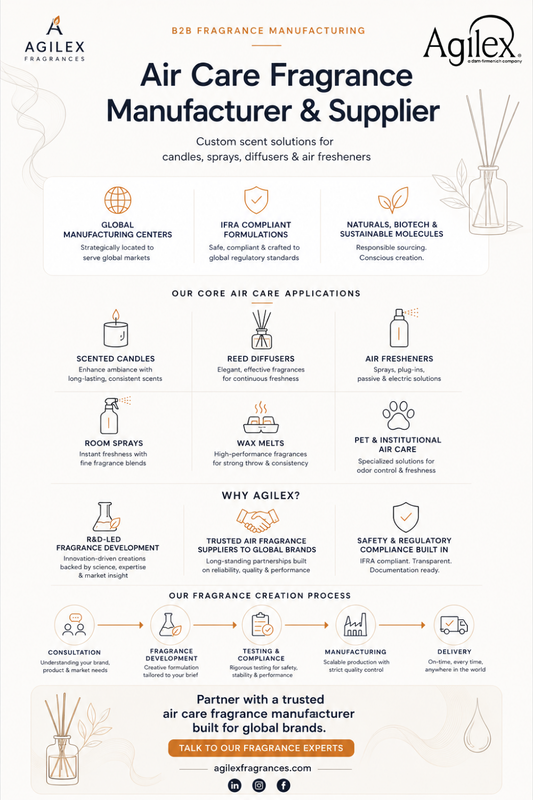
Sustainability has moved from a nice-to-have marketing angle to a genuine business requirement across the air care category. Retailers are asking harder questions, consumers are more attentive to environmental claims, and regulations are tightening in several regions. Here's how sustainability is actually reshaping air care fragrance manufacturing.
Ingredient Sourcing and Traceability
Sustainable sourcing starts with knowing where ingredients actually come from. This has become particularly important for natural ingredients tied to specific growing regions, where overharvesting or unsustainable agricultural practices can threaten long-term supply. Manufacturers increasingly need to provide traceability documentation, showing not just what's in a fragrance but where each component was sourced and under what conditions.
Renewable and Biodegradable Ingredient Development
The fragrance industry has invested significantly in developing renewable feedstocks for synthetic fragrance molecules, meaning ingredients derived from sustainable biological sources rather than petrochemical origins, while still delivering the performance characteristics (stability, longevity, consistency) that synthetics are valued for. Biodegradability is another growing consideration, particularly for fragrance ingredients that ultimately wash down drains or disperse into the environment through use.
Aerosol Propellant Innovation
Traditional aerosol propellants have faced scrutiny over environmental impact, pushing the industry toward alternatives with lower environmental footprints. This shift affects fragrance formulation because different propellant systems interact differently with fragrance oils, sometimes requiring reformulation to maintain the same scent throw and longevity with a new propellant type.
Packaging and the Fragrance Connection
While packaging sustainability (recyclable materials, reduced plastic, refillable systems) is primarily a packaging engineering question, it intersects with fragrance formulation in important ways. Refillable diffuser systems, for instance, need fragrance oils compatible with repeated exposure to the same reeds or vessel over multiple refill cycles without buildup or degraded performance.
Reducing Waste in Production and Development
Sustainable manufacturing also means reducing waste during the fragrance development process itself: minimizing sample waste during iteration rounds, using efficient production processes that reduce excess material, and designing formulations right the first time rather than requiring multiple costly reformulations after production has already begun.
Carbon Footprint of Ingredient Transport
Ingredients sourced from distant regions carry a transportation carbon cost that's increasingly factored into sustainability assessments. Some manufacturers are exploring regional sourcing alternatives or consolidating supply chains to reduce the overall footprint of ingredient logistics, though this needs to be balanced against genuine formulation quality and ingredient availability.
Certifications and Third-Party Verification
Various sustainability certifications exist across the fragrance and broader chemical industry, covering areas like responsible sourcing, environmental management systems, and ingredient safety assessments. Brands increasingly ask manufacturers about relevant certifications as part of the vendor evaluation process, particularly for retail partnerships with their own sustainability requirements.
Balancing Sustainability With Performance
It's worth being honest that sustainability and peak performance don't always align perfectly. A more sustainably sourced ingredient might have slightly different stability characteristics than its conventional counterpart, requiring formulation adjustments to maintain the same product performance. The best manufacturers work through these tradeoffs transparently with brands rather than either ignoring sustainability concerns or overpromising results that aren't achievable.
What Brands Should Ask Their Manufacturer
If sustainability is a genuine priority for your brand (not just a marketing angle), ask your manufacturer about their ingredient sourcing practices, what renewable or biodegradable options exist for your specific formulation needs, and what documentation they can provide to support sustainability claims you want to make.
Looking Ahead
Sustainability pressure in air care fragrance manufacturing isn't slowing down, and brands that build genuine sustainable practices into their sourcing relationships now will be better positioned as regulations and consumer expectations continue to tighten.
Agilex Fragrances works with brands to develop air care fragrances that balance performance with responsible sourcing and sustainability considerations.
Comments
No comments yet. Be the first to comment!